Showing posts with label Preschool. Show all posts
Showing posts with label Preschool. Show all posts
Bargain Hunting Along the Edge
This chapter contains the first of three trading methodologies that will
put the support and resistance tactics you learned in Chapter 3 to
good use. In this chapter you will learn a trading methodology I affectionately
refer to as the Sitcom System because it allowed me to trade on
my own schedule, often while I watched a favorite television sitcom. The
system combines what you have learned about support and resistance with
simple price action analysis. The Sitcom System focuses on daily charts,
and for the purposes of this discussion I define the end of the trading day
as 5:00 P.M. Eastern Time. This ensures that both the London and New York
trading days have closed before we begin to plan a trade, allowing us to see
the full range or price action for that trading day.
After each trading day there are two distinct boundaries formed by
support and resistance. The daily high is a boundary that buyers could not
overcome; the daily low is a boundary that sellers could not overcome. The
extreme edges of price action for a trading day mark the front lines in the
battle between buyers and sellers. Traders can use these clearly identified
support and resistance zones to their advantage with the help of simple
price action analysis.
To trade the Sitcom System, you need a trend, a bargain day, a support
or resistance zone, and a profit target. If you’re one of those traders who
believes that a daily chart requires 100 pip stops, you’re about to learn a
much better way to trade long-term charts.
Managing Profit

Complete trade management should include guidelines to enter a
trade, manage risk, and manage when to take profit. Many traders
focus on entering and managing risk but leave managing profit open
to subjective decision making, which is a mistake. Knowing when to take a
profit is important enough to include managing profit as a core trading principle
for bargain hunters. In this chapter you will learn to manage profit
Managing Risk

Losing is part of trading, and sooner or later you will lose money on
a trade. How you handle risk is the single most important concept a
trader must understand to survive long term. Unfortunately, managing
risk is a confusing topic for many traders. Through my blog I’ve spoken
with traders from around the world who have made the same mistakes I did
as an inexperienced trader; the discussions in this chapter are a response
to those conversations.
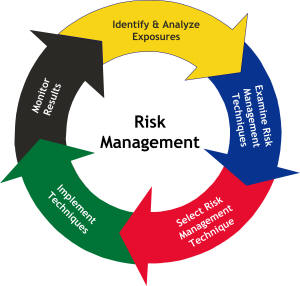
In this chapter you will learn how to use stop orders, avoid overtrading,
size your positions correctly, and manage trailing stops appropriately.
Managing risk is a key principle of bargain hunting because you can’t trade
if you end up losing all your money. Arm yourself with the information in
this chapter and you’ll be prepared to protect your account capital from
the risks of trading currency.
MANAGE YOUR PROFIT

Taking profit is often more difficult than taking a loss for many traders.
Unlike risk, reward is not a fixed variable. The market may move 10 pips
or 1,000 pips in your favor, and though you know how much you’ll lose
if the trade goes bad, you have no idea how much potential profit a trade
MANAGE YOUR RISK

The only factor a trader has under her control when a trade is opened is
risk. Managing the amount of money you lose when a trade goes bad is
critical to your longevity as a trader. The reality is that there is no safe
NEVER PAY FULL PRICE

In real estate it is said the real profit is made when you purchase the property,
not when you sell it. This adage means that when you purchase a
home or investment property, you should try to get the absolute best price
for the property. Paying as little as possible for a home will help you makethe most profit when you decide to sell it at a later time. Buyers who pay
market or get into bidding wars for a home are paying full price and will
have a much harder time making a profit than those smart enough to wait
for the best price.
LEARN TO READ PRICE ACTION

Humor me for a moment and consider this riddle: What is the difference
between a great bass guitarist and a great bass guitarist? It’s an impossible
riddle, right? Although both bass guitarists can play and entertain a crowd,
only one truly understands how music works. The other has simply memorized
notes and mastered a tempo. Without understanding how music is
LIVE YOUR LIFE

Why are you trading? Are you trying to fulfill a lifelong desire to wake up at
3:00 A.M. and stare at currency charts for 10 hours a day? I didn’t think so.
Unfortunately, I continue to meet traders who remain glued to their charts
for more than 10 hours a day! Ironically, for many of these traders their
effort doesn’t translate into additional profits. I don’t know your interest in
trading, but whatever the reason you trade, never forget that there is more
to life than trading!
Principles of a Bargain Hunter
Principles of aBargain Hunter
have paid less for something you just bought. From garage sales
to global finance, bargain hunters seek out the absolute best price,
whether they are buying velvet Elvis or 1 million euros. Under all the fancy
software, chart patterns, indicators, and analyst opinions, trading currency
has only one goal: to buy currency when it is dirt cheap and to sell it to
someone else for top dollar. Unfortunately, traders often get distracted
from the primary goal of trading to search out new or exotic trading systems
promising to have unlocked the secrets of trading currency. There is
no secret to making a profit, whether you’re running a pawn shop or trading
pounds. Your job as a trader is to buy at a value, sell at a premium, and
never pay full price.
Identifying a good deal in the currency market is a little more complicated
than telling the local car dealer you won’t pay sticker price. Traders
become bargain hunters by learning to read price action and then anticipating
the market’s next move. It takes discretion and experience to develop
a sixth sense about price action, and even an experienced bargain hunter
can get suckered from time to time. Bargain hunting is a large component
of the way I trade, because demanding the best price out of every trade
ultimately reduces risk and increases profit.
I have created five principles of a bargain hunter to frame my style of
discretionary support and resistance trading. The strategies described in
this book have their own guidelines for locating trades, but all are grounded
in the principles of bargain hunting. Each of the five principles is designed
to guide you through a specific trading task. From maintaining a healthywork and life balance to managing profit, the tenets of each principle in
this chapter must be met before I will take a trade. Pay close attention to
the material covered in this chapter; this is how I bargain hunt and I don’t
mind being called cheap. It’s a badge I wear proudly.
SELECTING A CURRENCY DEALER

The only partner a retail currency trader needs is a retail currency dealer.
No two dealers are alike, so care should be taken to select the very best
dealer as your trading partner. We discussed earlier that currency dealers
are different from stockbrokers because they routinely assume the full
EARNING INTEREST

The currency market is designed to facilitate the trade of money between
two parties interested in actually delivering the currency being traded. The
contracts traded on the spot market are designed to settle within two business
MARGIN AND LEVERAGE

Currency is traded in lot sizes ranging from 100- to 100,000-unit lots on the
retail spot market. Remember that a unit of currency could be a dollar,
euro, pound, or whatever your account denomination. By trading multiple
lots, a currency trader can hold a position of virtually any size, provided
ORDER TYPES

At some point you will have to place an order with your dealer to make any
money in the currency market. Opening, closing, and managing trades are
accomplished through four different order types. Market orders, entry orders,
stop orders, and limit orders all serve a specific role in trading on the
forex market. The implementation of each order type is slightly different
among currency brokers. Ensure that you have a firm grasp on how to use
your dealer’s software before you trade with real money.
TRADE MECHANICS

Trading currency is a process of exchanging one currency for another, so
each currency trade is actually two transactions happening at the same
time. One currency is bought while the other is sold. The forex market
quotes prices as currency pairs to facilitate the ease of trading one currency
FOREX VERSUS EXCHANGE MARKETS

The forex market is not structured like a traditional exchange market such
as the New York Stock Exchange or the Chicago Mercantile Exchange.
Forex is a decentralized global marketplace where trades are cleared one
on one between trading partners. There is no central exchange, no pit full
of yelling traders, no big board of quotes on a New York street, and no
closing bell to ring. The pros and cons of an exchange-based market versus
off-exchange currency trading are debatable, but there are obvious differences
you should understand before trading in the forex market.
FOREX PARTICIPANTS

Forex has a diverse population of participants, ranging from Japanese
housewives to powerful central bankers. The objectives of the participants
differ, and their individual actions may have dramatic affects on
the market. It is important to remember that the forex market is an offexchange
marketplace; there is no central exchange where all orders are
cleared, as on the New York Stock Exchange or the Chicago Mercantile
Exchange. The bulk of trading is done between trading partners on the
interbank; however, small retail traders are unable to trade directly with
partners on the interbank. Therefore, some participants in the forex market
exist to create a marketplace for others. Currency dealers create a
market for smaller retail speculators and offset their risk by trading with
their larger partners on the interbank. The hierarchy of forex participants
is illustrated in Figure 1.1. There is a definite food chain among forex
market participants, with interbank members on top and retail speculators
on the bottom.
FOREX ROOTS

The roots of our modern forex market are an interesting topic that has
been covered ad nauseum by other trading books; however, I do believe
it is important to have some knowledge of the market’s history, so this
section covers the key points. If you have never studied global monetary
systems, consider this section an abridged history of the forex market.
The modern forex market’s roots began with over-the-counter currency
trading desks established by banks throughout the 1970s and 1980s,
following the collapse of a postwar-era monetary system known as the
Bretton Woods system. Bretton Woods was established in June 1944, as
World War II came to a close. The Allied nations sought to establish a new
monetary system to promote global investment and capitalism and to eliminate
the challenges of a gold standard system.
WHAT IS FOREX?
The currency market, or more specifically the forex market, derives its
name from the generic term foreign exchange market. The forex market is
a decentralized global network of trading partners, including banks, public
and private institutions, retail dealers, speculators, and central banks involved
in the business of buying and selling money. The forex market is a
Exploring the Currency Market
Whether you trade stocks, commodities, currencies, or real estate
on Mars, it is important to understand the marketplace in which
you’re working. If you have little market experience, if you’re new
to currencies, or if you want to brush up on market basics, this chapter is
for you. This chapter does not contain an exhaustive history of the modern
foreign exchange (forex) market. Instead, we look at the market from the
perspective of an active trader. You will learn about the roots of the market,
its structure and participants, how currency trades are executed, and the
tools used to conduct business. If you have experience trading other markets,
this chapter will brief you on the unique attributes of the currency
market. If you have little or no experience in trading, the contents of this
chapter are an essential part of learning the business of currency trading.
The Big Three

Congratulations! You've gotten through the Pre-School and, with a few boo-boos here and there, you are ready to begin your first day of class!
You did go through the Pre-School, right????
Subscribe to:
Posts (Atom)